Why circularity is indispensable for minerals security
The margin for effective climate action is rapidly shrinking. The race to reach net-zero will be won or lost not in the skies or seas, but in mines, refineries and increasingly, electronics repair shops and recycling plants that supply the world with critical minerals.
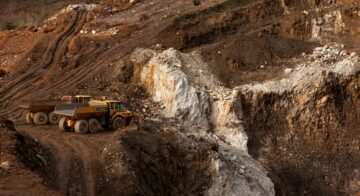
Photo by MiningWatch Portugal on Unsplash
The margin for effective climate action is rapidly shrinking. The race to reach net-zero will be won or lost not in the skies or seas, but in mines, refineries and increasingly, electronics repair shops and recycling plants that supply the world with critical minerals. Critical raw minerals (CRMs) are central to achieving a net-zero economy, as limiting global warming to well below 2°C requires the rapid deployment of low-carbon technologies such as solar panels, batteries, electric vehicles and supportive grid infrastructure. Materials including copper, lithium, nickel, cobalt and rare earth elements are critical inputs that will play as strategic a role in the energy transition as oil and gas have played in the fossil fuel era.
Traditionally, criticality assessments have focused on minerals required for defence, telecommunications and strategic technologies, such as semiconductors. However, those minerals have also become increasingly essential for the low-carbon transition because renewable energy technologies require significantly more CRMs than fossil fuel-based technologies. For example, an electric car requires approximately six times more minerals than a standard petrol vehicle and onshore wind power plants use around nine times more minerals than gas-fired plants. As a result, securing access to CRMs in a responsible and sustainable manner has become a central challenge.
The International Energy Agency (IEA) estimates that, under a net-zero pathway, demand for these minerals could surge six- to sevenfold. The growth of zero-carbon technologies is expected to double demand for these minerals by 2030 and quadruple it by 2050. Some calculations anticipate that annual demand for cobalt, graphite and lithium could climb by up to 4.5 times 2018 levels by 2050. Supplies of aluminium and palladium are expected to remain adequate, but copper, nickel and cobalt face potential shortages. In response, countries are expanding exploration, advancing processing technologies and implementing economic incentives to strengthen their supply chains.
Their supply is highly concentrated, geopolitically sensitive and often technologically difficult to extract, so the efficient use of resources through circular economy strategies is essential to delivering a timely and equitable energy transition.
Beyond securing supply, circular approaches can generate multiple co-benefits. They enhance resilience by buffering against geopolitical and operational disruptions, cut production costs by making use of secondary materials and reduce environmental impacts such as deforestation, water stress and pollution. They also contribute to global development by fostering technology transfer, local processing industries and workforce skills, while supporting climate goals by enabling more sustainable energy transition technologies.
The IEA estimates that increasing recycling of critical minerals could reduce new mining requirements for key energy transition materials by 25-40 per cent by 2050. Other estimates are even higher – the Foundation for Industrial and Technical Research SINTEF estimates that up to 58 per cent of cumulative minerals demand for 2050 could be reduced through material substitution, reuse and lifetime extension, and recycling – making circularity integral to the security and sustainability of critical minerals supply.
Both process circularity (the reduction of water pollution, tailings and recovery of mining wastes at site level) and product circularity (the repair, reuse and recycling of products to extend product lifetimes and finally recover secondary materials) have a role to play. Secondary raw materials – recycled critical minerals that have been recovered from end-of-life batteries and discarded electronics – represent an underexplored opportunity. Reuse is a crucial element of circularity, involving keeping minerals in circulation. For example, retired EV batteries typically retain 70–80 per cent of their capacity and could be repurposed for charging stations or mini-grids, while retired commercial solar panels could revitalize electric bike stations or community solar systems.
According to an analysis by the UN’s Department of Economic and Social Affairs, 153 countries are increasingly turning to the recycling of waste and scrap to reduce the need for new mining while meeting domestic demand for critical minerals such as copper, aluminium, cobalt, nickel, rare earth elements and lithium. Systematic recovery of minerals from electronic waste, end-of-life batteries, and other industrial by-products could provide 21 per cent of the current demand by recycling from waste and scrap using the latest technologies, while also reducing the social and environmental impacts associated with extraction.
Circularity can help bypass some of the challenges of accessing CRMs through linear supply chains – an increasingly complex issue, shaped by geopolitical tensions, severe environmental degradation, social risks, and economic and technological barriers that threaten the pace and stability of global energy transitions.
First, the mining and processing of CRMs is heavily concentrated in a small number of countries. For example, the Democratic Republic of Congo (DRC) possesses 55 per cent of global cobalt reserves and 74 per cent of production. China dominates processing, handling half the world’s lithium, two-thirds of its cobalt, one-third of its nickel and nearly all rare earth elements. It also dominates the refining and manufacturing stages, accounting for 77 per cent of lithium imports, more than 60 per cent of lithium refining and 80 per cent of battery cell production. Consequently, the top three refining countries now hold 86 per cent of the market share, while the top three producing countries account for 77 per cent of global mining output, a concentration that is expected to remain high for copper, nickel and cobalt. This creates significant supply chain risks.
Governments can leverage control of mineral production and processing to exert influence internationally. Export controls are becoming increasingly common for critical minerals, particularly as market concentration intensifies. According to the IEA, today, more than half of energy-related minerals are subject to some form of export control. China’s recent curbs on gallium, germanium, tellurium and certain rare earths, along with the DRC’s temporary suspension of cobalt exports in 2025, illustrate how unilateral trade measures can destabilize markets.
In 2025, China introduced two waves of export controls on rare earth elements (in April and again in October) tightening licensing requirements and restricting shipments to the United States and Europe. The measures underscored the depth of global dependence on Chinese processing and refining capacity and exposed vulnerabilities in supply chains. The restrictions heightened resource security concerns and accelerated efforts to diversify supply and invest in both alternative sources and domestic recycling capacity.
Second, securing critical raw materials also entails significant socio-economic externalities. Although mining can generate positive economic benefits, such as employment and income for communities, unregulated and illegal extraction often exacerbates human rights abuses and governance challenges. In the DRC, artisanal cobalt mining is closely associated with child labour, corruption and weak regulatory oversight. Amnesty International found that children working in artisanal cobalt mines in southern DRC are paid less than US$2 per day, lack protective equipment, are exposed to hazardous chemicals and are subjected to violence and extortion by mining company security guards and state officials. Similarly, the Business & Human Rights Resource Centre recorded 102 allegations of human rights and environmental abuses linked to Chinese overseas transition-mineral projects (2021–2022), concentrated heavily in countries with weak governance. Indonesia, Peru, DRC, Myanmar and Zimbabwe accounted for over 70 per cent of all cases.
Third, irresponsible and illegal extraction comes with substantial environmental costs. Globally, the mining sector contributes roughly 8 per cent of the world’s carbon footprint and places severe pressure on water systems, with 16 per cent of critical mineral sites located in water-stressed regions. These operations risk acid mine drainage, tailings failures and groundwater contamination. Mining also drives extensive land degradation, including the loss of 1.4 million hectares of forest between 2001 and 2020, leading to soil erosion, biodiversity loss and harm to Indigenous and local communities. Physical risks to supply are intensifying under climate change. Mining operations, particularly those reliant on water, are highly vulnerable to extreme weather events such as floods, droughts and storms. These events can halt production, damage critical infrastructure and trigger environmental disasters, such as hazardous waste leaks or tailings dam failures, further compounding supply risks.
Environmental and human rights abuses are not only significant ethical concerns but also signal substantial socio-economic risks for communities near mining and processing sites. These impacts can undermine the legitimacy of the clean energy transition and, in practice, slow progress toward net-zero targets, as community opposition, legal challenges and public protests increasingly cause project delays, cost overruns or cancellations.
Together, these factors and constraints illustrate the bottlenecks that hinder the timely and resilient expansion of business-as-usual linear mining and processing, posing a major challenge for the energy transition.
| Country | CRM strategy and adoption year | Circularity/recycling target | Other relevant aims |
| Australia | Critical Minerals Strategy 2023–2030
| In line with the National Circular Economy Framework, double the circularity rate from 4.6 per cent to 9.2 per cent and achieve an 80 per cent recovery rate for materials. | Progress the critical minerals sector towards a circular economy; recycle and reprocess materials; zero lithium tailings; convert mining tailings into new products. |
| United Kingdom | Vision 2035: Critical Minerals Strategy (November 2025) | 20 per cent of total annual UK demand for critical minerals to be met through recycling products to recover critical minerals, by 2035. | Support domestic industry; decrease reliance on imports. |
| European Union | Critical Raw Materials Act (May 2024) | At least 25 per cent of the EU’s annual consumption of strategic raw materials must come from recycling by 2030. | Reduce strategic dependencies; improve sustainability and circularity. |
| United States | Executive Order 13953 (September 2020) | Sets out three key pillars (diversifying supply; developing substitutes; improving reuse and recycling), without setting specific numerical targets. | Improve balance of trade; support national security; bolster job creation. |
| China | Mineral Resources Law (2024) 14th Five-Year Plan on Circular Economy (2021) | No specific target for recycling CRMs holistically. Instead, sets targets for individual materials, such as producing 20 million tonnes of recycled non-ferrous metals. | Develop the national resource utilization capacity; improve industrial recycling system; bolster circular economy. |
| India | National Critical Minerals Mission (NCMM) 2024–2031 | Includes a ₹1,500 crore incentive scheme to develop at least 270 kilotonnes of annual recycling capacity, resulting in around 40 kilotonnes of annual critical mineral production. | Build India’s self-reliance in the critical mineral sector. |
| Japan | Resource Green Transformation Strategy (GX) (July 2023) | Sets a lithium recycling target of 70 per cent and a nickel/cobalt target of 95 per cent, by 2030. | Decrease national reliance on critical mineral imports; evaluate this as an issue of national security. |
South Korea
| Resource Circulation Plan Supply Chain Stabilization Fund (2024) | Increase recycling from 2 per cent to 20 per cent by 2030; increase circular utilization rates from 70.3 per cent to 82 per cent; reach a 20 per cent recycling rate for ten strategic critical minerals by 2030. | Improve resource security and export-industry competitiveness; support climate transition. |
| Canada | The Canadian Critical Minerals Strategy (December 2022)
| The current recycling rate is 6.1 per cent; no circularity target has been set. | Create jobs; build the Canadian economy; improve supply chain resilience; tackle climate change. |
| Brazil | National Circular Economy Strategy (ENEC) (June 2024) | 1.3 per cent of materials come from secondary resources. Proposed circularity policies are still in legislative debate instead of formal law. | Reduce reliance on natural resources; stimulate a just transition. |
The inclusion of circularity measures and targets in national critical mineral strategies can be seen as a shift towards so-called ‘circular resource nationalism’: a policy approach in which a country prioritizes sovereign control over its secondary material resources (at all stages of their lifecycle) and asserts this control through the principles of the circular economy. This often involves leveraging circular economy strategies to maximize the value derived from domestic primary and secondary resources. Specific policy measures that could be considered circular-resource nationalist include introducing a strategic securitization approach to circularity, setting domestic targets for the recycling and processing of strategic raw materials, and state support for domestic recycling businesses and trade restrictions.
Increasingly, trade restrictions on secondary materials are emerging as a flashpoint in global supply chains, particularly in the aluminium scrap market. In response to surging exports (EU aluminium scrap exports hit a record of roughly 1.26 million–1.3 million tonnes in 2024–25, about 50 per cent higher than five years earlier with much of it flowing to Asia), the European Commission is preparing export curbs in 2026 to secure feedstock for domestic recycling and green industries and stem what some see as ‘scrap leakage’ out of the bloc.
Rare earth elements (REE) have been at the centre of geopolitical competition. To reduce dependence on primary mining of rare earths and avoid the ecological damage that goes along with expanding primary extraction, there are circularity solutions.
In 2022, the US Department of Energy analysed nonconventional sources for rare earth resources. Its findings support the case that sufficient REE are present to extract quantities of ore for commercial production. A study conducted by the University of Texas found that there could be as much as 11 million tons of REE in accessible coal ash in the US, nearly eight times the amount that it currently has in domestic reserves. $8.4 billion worth of REE could be extracted from the accessible supply of coal ash. Furthermore, mine tailings can serve as sources of secondary REE sources.
At the processing stage, in which large volumes of chemicals and water are used, closed-loop water systems are among the most effective measures, allowing processing plants to recycle process water. In hydrometallurgical rare earth refining, where techniques such as solvent extraction are used to separate individual rare earth elements, circular process design can enable the regeneration of reagents, recycling of water and minimization of waste streams.
Another key strategy focuses on extending the lifetime of technologies that rely on rare earth permanent magnets, particularly in high-tech sectors such as wind turbines, electric vehicles, robotics and advanced electronics. Designing products for durability, repairability and modular replacement can significantly extend operational lifetimes and reduce the need to replace magnets, which is expensive and energy-intensive. Circular value chain approaches in sectors such as electric motors emphasize refurbishment, remanufacturing and the reuse of rare earth-containing components before recycling becomes necessary.
At end-of-life, recycling rare earth elements from e-waste, especially those embedded in permanent magnets, is rapidly evolving from a niche technical pursuit into a strategic industrial opportunity. Magnets used in electric vehicles, wind turbines, robotics and electronics contain disproportionately high concentrations of critical rare earths, such as neodymium and praseodymium, making them prime targets for recovery. Commercial momentum is building: a new rare earth magnet recycling facility opened in Birmingham in January 2026 and the UK government, in alignment with its domestic critical minerals strategy, recently offered a £12 million capital grant to support the development of a rare earth magnet recycling facility in Belfast, which is expected to produce around 400 tonnes of high-purity rare earth oxides per year using advanced ‘long-loop’ recycling technology. |
Overall, international cooperation will remain indispensable for advancing circularity in critical mineral value chains. No single country controls all segments of the value chain, making cross-border coordination essential to the remanufacturing and refurbishment of technologies containing critical minerals, and the recovery and processing of materials at end-of-life. Linking major e-waste producing countries with resource-rich nations and refining hubs and downstream manufacturers is required to close material loops at scale. International partnerships are needed to leverage economies of scale, reduce costs and accelerate technological innovation in recycling and material recovery. Effective cooperation will rely on joint investment frameworks, offtake agreements for secondary materials and shared risk-mitigation instruments.
Existing and emerging international coalitions for critical minerals will increasingly need to consider circularity-related harmonized standards and metrics (see Table 2).
Table 2: International mining initiatives coalitions on responsible mining and their circularity plans
| Name of initiative | Areas of activity | How they address circularity |
| International Council on Mining and Metals (ICMM) | ‘Mining Principles’ sets out good practice environmental, social and governance requirements for the mining and metals industry; company members must meet a comprehensive set of performance expectations. | Development of a metrics framework for circularity in the mining and metals industry. Its 2024 ‘Tools for Circularity’ provides a toolkit for circularity at mine sites and across the mining and metals value chain. |
| Initiative for Responsible Mining Assurance (IRMA) | Third-party auditing, certification and independent verification. | Formation of an expert working group on mining and circularity to integrate circular economy concepts into the IRMA ‘Standard for Responsible Mining’. |
| Consolidated Mining Standard Initiative | Aims to bring together the best aspects of four well-established standards: ‘The Copper Mark’, Mining Association of Canada’s ‘Towards Sustainable Mining’ (TSM), World Gold Council’s ‘Responsible Gold Mining Principles’ and ICMM’s ‘Mining Principles’. | Inclusion of circular economy performance areas in its 2025 ‘The Consolidated Standard’ consultation draft. |
| Extractive Industries Transparency Initiative (EITI) | Focuses on transparency, data disclosure and governance in extractive sectors. | No explicit coverage of circular economy practices or mineral recycling at present, but transparency data is useful for circularity and traceability. |
| Global Council for Responsible Transition Minerals | Launched by the Paris Peace Forum, it brings together governments, companies, and civil society to tackle governance, sustainability, and coordination in energy-transition mineral supply, covering international cooperation, market frameworks, transparency, value creation, and environmental and social sustainability. | Emphasis on the need to develop a global framework for circularity and an international multi-stakeholder platform or forum for coordinated efforts. |
| Aluminium Stewardship Initiative (ASI) | Sets standards and a certification system for the aluminium value chain. | Chain of custody covers both primary aluminium and recycled aluminium flows. Circularity included in the ASI Performance Standard. |
National governments are increasingly integrating circularity into their critical minerals strategies, i.e. through recycling targets, extended producer responsibility schemes and incentives for secondary material markets. At the same time, international industry networks are developing voluntary criteria, traceability tools and circularity standards to improve environmental performance across mineral value chains.
However, fragmented national policies and voluntary industry initiatives are not a substitute for a broader, coordinated global governance framework. Ensuring responsible and circular CRM supply chains will require a combination of internationally harmonized standards and regulations, technology diffusion, traceability of secondary materials, and market incentives, to create level playing fields with primary minerals and stabilize prices.
Despite growing recognition of its importance, there is currently no international initiative dedicated specifically to circularity for energy transition minerals. G7 and G20 have developed various initiatives, such as the G7 Berlin Roadmap on Resource Efficiency and Circular Economy (2022-2025) and the G20 Resource Efficiency & Circular Economy Industry Coalition, launched in 2023. The UN Task Force on Critical Energy Transition Minerals, launched at UNEA 7 in December 2025, includes circularity as a ‘technical cluster’. All these initiatives still fall short of introducing an internationally coordinated approach and practical implementation mechanism.
To unlock the full circularity potential of critical mineral value chains, a dedicated international mechanism, such as an International Materials Agency, is needed. Such a platform would address regulatory fragmentation across countries, address the lack of open-access data through a global data hub, facilitate cross-border flows of secondary raw materials and coordinate circularity strategies that better align the demand for primary minerals with recycled and substitute alternatives. This approach would help to systematically reduce long-term dependence on primary extraction and mitigate associated trade-offs with water, land and biodiversity systems by embedding circular economy principles into the core architecture of critical minerals governance. The G7, together with G20 countries, could advance this agenda by establishing a Flagship Circular Critical Minerals Partnership, as recommended by the Think7 task force on critical mineral value chains.
Going forward, three areas warrant further research:
First, how can circularity be integrated into new and existing international critical minerals partnerships and investment strategies to create mutually beneficial (“win-win”) outcomes between resource-rich producer countries and industrialised consumer economies?
Second, to what extent can placing circularity at the centre of mineral strategies shift critical minerals governance away from a narrow supply-security focus for advanced economies toward more balanced models of global cooperation, resilience and benefit sharing?
Third, what role can circular economy strategies play in ensuring that the growing demand for critical minerals does not undermine other sustainable development objectives, including biodiversity protection, water security and social development?
Recent Publications
-
Towards a just and circular shipbreaking industry in South Asia

Towards a just and circular shipbreaking industry in South Asia